
Key takeaways
- “Nervous system reset” is wellness vernacular, not clinical language — but the biology it points at, allostatic load, is a well-established research concept.
- The goal is not permanent calm. It is autonomic flexibility: a stress response that turns on quickly and, crucially, turns off again.
- Heart rate variability (HRV) is the closest thing to a usable marker, though it is noisy and highly individual.
- The strongest evidence sits with the least glamorous inputs: sleep and regular movement. Breathwork, nature and contrast therapy add real but smaller effects.
- Polyvagal theory, which underpins much of the online conversation about “regulation”, is contested in the scientific literature. We use the language carefully here.
- A reset is not a treatment for clinical depression, anxiety disorders or PTSD. It can support recovery alongside proper care — it does not replace it.
What “nervous system reset” actually means
Search the phrase and you will find it attached to everything from four-second breathing videos to $30,000 retreats. That vagueness is a problem, because the underlying idea is sound and deserves better handling.
Here is the honest version. Your nervous system does not have a switch that gets flipped, stuck, and then reset. What it has is a response range. A healthy stress response rises sharply when something demands it and comes back down promptly when the demand passes. Under months or years of unrelenting load — deadlines, caregiving, financial pressure, poor sleep, no recovery time — that range narrows. The system starts running elevated at baseline and recovers more slowly after each new stressor.
What people are describing when they say they need a nervous system reset is usually that narrowing: wired but exhausted, unable to relax on holiday, reactive to things that would not normally register, waking at 4am with a racing mind. At The Pearl Laguna Beach we hear a version of this from almost every guest who arrives for a reset week, and the language is remarkably consistent across otherwise very different lives.
So a reset, properly understood, is not about achieving a state. It is about giving the system enough relief, for long enough, that its normal range returns.
The concept underneath the buzzword: allostatic load
The scientific term for what a reset addresses is allostatic load — a framework developed largely by the late neuroscientist Bruce McEwen at Rockefeller University.
Allostasis is the process of maintaining stability through change: your body constantly adjusts cortisol, blood pressure, heart rate, immune activity and glucose to meet whatever the day requires. That adjustment is healthy and necessary. Allostatic load is the cumulative wear that builds up when those adjustments never get switched off — when the system is chronically over-activated, or fails to shut down after a stressor ends, or under-responds and forces other systems to compensate.
McEwen’s work, and the large body of research that followed it, connected sustained allostatic load to structural changes in the brain regions that matter most for how we handle stress: the hippocampus (memory and context), the prefrontal cortex (executive control and emotion regulation) and the amygdala (threat detection). Under chronic stress, the first two tend to show reduced dendritic complexity while the amygdala shows the opposite. In plain terms: the braking system gets weaker and the alarm system gets louder.
This is the part worth holding onto. When a guest at our Laguna Beach, California wellness retreat says their fuse has got shorter over the past two years, that is not a character flaw or a failure of discipline. It is a predictable consequence of load without recovery.
The encouraging half of McEwen’s work is that these changes are largely plastic — they respond to changes in input. That is the entire premise of a structured reset.
Your autonomic nervous system, in ninety seconds
The autonomic nervous system runs everything you do not consciously control: heart rate, digestion, breathing rhythm, pupil size, blood flow. It has two main branches.
The sympathetic branch mobilises. It raises heart rate, redirects blood to muscle, sharpens attention, pauses digestion. This is “fight or flight”, though most of the time it is doing far more mundane work — standing up, climbing a hill, meeting a deadline.
The parasympathetic branch restores. It slows the heart, resumes digestion, supports tissue repair and immune function. This is “rest and digest”, carried largely by the vagus nerve, which wanders from the brainstem to the heart, lungs and gut.
The popular framing treats these as opposites, with sympathetic as the villain. That is not how they work. They are not a seesaw; they operate more like two pedals that can be pressed in different combinations. A healthy system uses both, fluidly, in response to what is actually happening.
The problem in chronic stress is not sympathetic activity. It is the loss of variation — the same middling activation all day, every day, regardless of whether anything is happening. Our coastal retreat in Laguna Beach is built around restoring that variation deliberately: real physical exertion on a morning hike, real stillness in the afternoon, real depth of sleep at night. Not constant calm. Contrast.
Going deeper: Sympathetic vs. Parasympathetic Nervous System: Why Balance Matters and Nervous System Regulation: What It Actually Means.
Heart rate variability: the closest thing to a marker
If a reset is real, can you measure it? Partly.
Heart rate variability is the variation in the time between consecutive heartbeats. A heart beating at 60 bpm is not beating exactly once per second — the intervals fluctuate, and much of that fluctuation is driven by vagal, parasympathetic input. Higher vagally-mediated HRV is generally associated with better emotion regulation, better executive function and lower cardiovascular risk. The neurovisceral integration model, developed by Julian Thayer and colleagues, frames HRV as an index of how well the prefrontal cortex is exerting inhibitory control over subcortical threat circuitry.
Two honest caveats, because HRV has become a wellness fetish object:
It is highly individual. Absolute values vary enormously by age, genetics and fitness. Your HRV compared to someone else’s tells you almost nothing. Your HRV compared to your own baseline tells you something.
It is noisy. Alcohol, illness, a late meal, a hot room, a hard workout the previous day, the position you were lying in — all move the number. A single reading is close to meaningless. A seven-day trend is informative.
Used correctly, HRV is genuinely useful as a trend line across a reset week, which is why many guests at The Pearl Laguna Beach wellness retreat arrive already wearing a ring or strap and leave with a visibly different curve. Used incorrectly, it becomes one more number to be anxious about — which rather defeats the purpose.
A necessary note on polyvagal theory
Much of what circulates online about “nervous system regulation” traces back to polyvagal theory, proposed by Stephen Porges in the 1990s. It introduced now-ubiquitous concepts: a “ventral vagal” state of social safety, a “dorsal vagal” shutdown state, neuroception, and the idea that a distinct evolutionary branch of the vagus underlies human social engagement.
It is a compelling framework and it has been genuinely useful to clinicians, particularly in trauma work, as a way of giving patients language for states they could not previously describe.
It is also scientifically contested. A detailed critique published in Biological Psychology in 2023 by Paul Grossman challenged all five of the theory’s core premises, including its evolutionary claims and its treatment of respiratory sinus arrhythmia as a clean index of vagal tone. A large group of researchers has raised related objections. Porges and colleagues have responded, and the debate is live and unresolved.
I am flagging this deliberately, because The Pearl’s wellness resort in Orange County sits in an industry where polyvagal vocabulary is often presented as settled neuroscience. It is not. The useful, uncontroversial core — that autonomic state influences how you feel and behave, and that this state responds to breathing, movement, temperature, safety and sleep — stands on its own without the contested scaffolding. That is the version we work from.
Signs of a nervous system that has lost its range
There is no diagnostic test and no checklist that makes this official. But the pattern people describe is consistent enough to be worth naming:
- Tired but unable to fall asleep; asleep but waking at 3–4am
- Relaxation itself feels uncomfortable — a day with nothing scheduled produces unease rather than relief
- Disproportionate reactions to small frictions, followed by disproportionate guilt
- Difficulty concentrating on anything that is not urgent
- Digestive changes with no clear medical cause
- Needing several days of a holiday just to stop vibrating — and only feeling human the day before flying home
- Physical tension that does not release: jaw, shoulders, chest
That last cluster is worth sitting with. If a two-week holiday reliably takes six days to land, you are not being dramatic — you are describing a recovery process with a latency, and a schedule that never allows it to complete.
What actually works — the evidence, honestly ranked
This is the section most articles on this topic avoid, because ranking the interventions means admitting that the least marketable ones win.
Evidence strength for common nervous system reset interventionsLeverStrength of evidenceWhat it doesRealistic effectSleepStrongRestores prefrontal regulation of the amygdalaLarge — the foundation everything else sits onRegular movementStrongImproves depressive symptoms, stress reactivity, sleep qualityLarge, dose-dependentNature exposureModerateLowers self-reported stress; improves wellbeingModerate, threshold-dependentSlow breathing / breathworkModerateShifts autonomic balance within minutesSmall–moderate, but immediate and freeHeat (sauna, banya)Moderate for cardiovascular; thinner for mental healthAcute relaxation; cardiovascular adaptationModerate, mostly observational dataCold exposureWeak–emergingDelayed stress reduction; possibly sleepSmall, and oversold onlineReduced digital stimulationEmergingRemoves a continuous low-grade demandUncertain magnitude, high plausibility
Sleep does the heavy lifting
Sleep deprivation does not just make you tired — it specifically degrades the circuitry a reset depends on. Work from Matthew Walker’s lab at Berkeley, published in Nature Human Behaviour, found that a night without sleep impaired medial prefrontal cortex activity and disrupted its connectivity with emotion-processing regions, amplifying next-day anxiety. The same research identified NREM slow-wave sleep as the phase carrying the anxiolytic benefit. Even modest night-to-night reductions in sleep predicted measurable increases in anxiety the following day.
This is why every serious protocol at our Laguna Beach, California wellness retreat is built backwards from sleep. Dinner timing, light exposure, afternoon activity intensity, evening screen policy — these are not lifestyle decorations. They are the sleep protocol.
Going deeper: Sleep and Depression: Why the Relationship Goes Both Ways.
Movement is the most reliable intervention with a name
The largest synthesis to date — a network meta-analysis of 218 randomised trials and 14,170 participants, published in the BMJ in 2024 — found exercise to be an effective treatment for depression. Walking or jogging, yoga, strength training, mixed aerobic exercise and tai chi all produced moderate reductions in depressive symptoms; dance produced large ones. Light activity such as walking and yoga still delivered clinically meaningful effects, with greater benefits from more vigorous exercise.
The authors were explicit that the overall quality of evidence was low and that very few trials followed participants for a year or more. That caveat matters, and I would rather state it than bury it. But the direction of effect is consistent across an unusually large body of work.
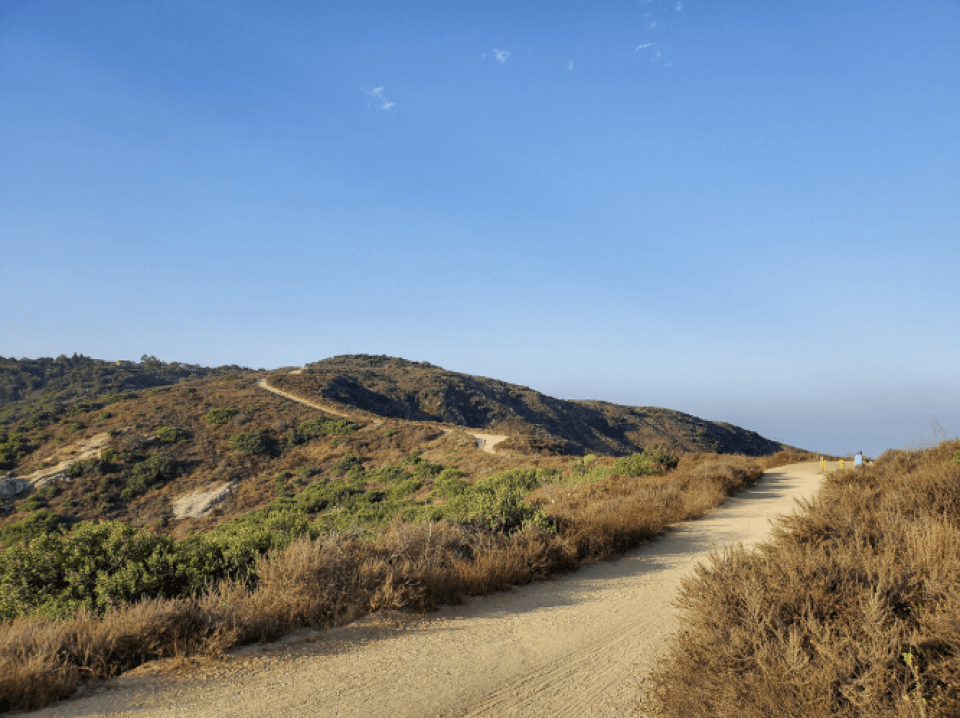
Guided coastal hikes are the daily backbone at The Pearl Laguna Beach for exactly this reason — it is the highest-yield hour of the day, and it happens to run through one of the more spectacular stretches of the Southern California coastline.
Nature has a threshold, and it is lower than you think
A study of 19,806 people in England, published in Scientific Reports in 2019, found that those spending at least 120 minutes per week in natural environments were significantly more likely to report good health and high wellbeing. Below that threshold, no significant association appeared. Benefits peaked somewhere around 200–300 minutes per week, with no further gain beyond.
Two important qualifications: the study was cross-sectional, so it cannot establish that nature causes the improvement, and it did not matter whether the 120 minutes came in one long visit or several short ones.
Still, the practical translation is useful. Two hours a week is not an aspiration — it is roughly twenty minutes a day. A healthy lifestyle retreat on the Southern California coast clears that threshold before breakfast, which is less a programming achievement than a matter of geography.
Breathwork: small, real, and immediately available
A randomised controlled trial from Stanford, published in Cell Reports Medicine in 2023, compared three breathing practices and mindfulness meditation, five minutes a day for one month. Cyclic sighing — a pattern emphasising a prolonged exhale — produced the greatest improvement in mood and the largest reduction in respiratory rate.
Separately, meta-analyses of HRV biofeedback, which trains slow breathing at around six breaths per minute, have found moderate reductions in self-reported stress and anxiety.
The honest framing: breathwork will not resolve two years of accumulated load. But it is the only lever on this list that costs nothing, requires no equipment, works within minutes, and is available in the middle of a difficult meeting. That combination makes it the most portable thing a guest takes home from The Pearl Laguna Beach wellness retreat.
Going deeper: Breathwork and Mental Health and The Vagus Nerve Explained.
Heat and cold: promising, oversold, worth including
Frequent sauna bathing has been studied extensively in Finnish prospective cohorts, with associations reported for cardiovascular and several other outcomes. The mental-health-specific evidence is thinner, and cohort data cannot separate the heat itself from the lifestyle and social ritual around it.
Cold is where the gap between social media and the literature is widest. A 2025 systematic review and meta-analysis in PLOS ONE pooled 11 randomised controlled trials and 3,177 participants. Cold-water immersion produced no significant stress reduction immediately afterwards, but a significant reduction at 12 hours post-exposure. There was no significant difference in mood versus controls. Sleep quality improved. The authors noted that the evidence base is limited by few trials, small samples and — remarkably — that only one study included female participants.
We run a traditional Russian Banya and a cold plunge at our coastal retreat in Laguna Beach, and guests consistently rate the contrast ritual among the best parts of the week. I think that is real and worth offering. I also think “resets your nervous system in three minutes” is a claim the data does not support, and we do not make it.
Going deeper: Russian Banya and the Nervous System and Sauna vs. Cold Plunge for Stress and Recovery.
Why a few days away does what a busy week at home cannot
If the levers are this ordinary, why not simply apply them at home?
Because the limiting factor is almost never knowledge. It is dose, sequencing and subtraction.
Dose. Twenty minutes of walking and six hours of sleep, squeezed around everything else, is not the same input as three hours of movement, nine hours of sleep and two hours outdoors, sustained for a week. Below a certain dose, the effects are real but too small to notice — which is why most people conclude the interventions do not work for them.
Sequencing. These levers interact. Morning light and daytime exertion improve sleep depth; deeper sleep improves next-day emotional regulation; better regulation makes the following day’s exertion feel manageable. Run in sequence, they compound. Run in random order around a full calendar, they largely cancel out.
Subtraction. This is the one people underestimate. Much of what a structured reset does is remove inputs — decisions, notifications, logistics, the low-grade cognitive tax of running a household or a company. You cannot add recovery to an unchanged load and expect much.
This is the actual argument for a residential reset, and I would rather make it plainly than dress it up. The Pearl Laguna Beach is an intimate twelve-room canyon sanctuary that has been running since 2005, with groups capped at eight to twelve guests. The small scale is not a luxury detail — it is what makes the sequencing possible at all.
How long does a nervous system reset take?
There is no validated timeline, and anyone who quotes you one precisely is guessing. What the underlying physiology suggests:
TimeframeWhat typically shiftsDays 1–2Often the worst of the week. Sleep debt surfaces, headaches are common, stillness feels uncomfortableDays 3–4Sleep depth improves; the constant background urgency starts to drop awayDays 5–7Mood and cognitive clarity shift noticeably; HRV trend usually visibleWeeks 2–8 afterThe part that determines whether any of it holds — this is where a reset either becomes a change or becomes a nice memory
That last row is the one that matters. A week is enough to interrupt a pattern and demonstrate what a regulated baseline feels like. It is not enough to consolidate it. This is why our programmes at The Pearl Laguna Beach — the 3-Day Reset, 4-Day Recharge, 5-Day Immersion and the flagship 1-Week Transformation — are built around practices you can actually keep, rather than around experiences that only exist on the property.
What a nervous system reset is not
Plainly, because this matters more than anything else on this page.
A reset is not a treatment for a psychiatric condition. If you are living with major depression, an anxiety disorder, PTSD or a trauma history, structured rest, movement and time outdoors can genuinely support your recovery — alongside evidence-based care from a qualified clinician, not instead of it.
It is not a substitute for medical assessment. Fatigue, poor sleep, low mood and cognitive fog have medical causes that no retreat can address: thyroid dysfunction, anaemia, sleep apnoea, perimenopause, medication effects. If these symptoms are new, persistent or worsening, the first appointment should be with a physician.
And it is not permanent. Nobody stays reset. The system responds to input; when input changes back, so does the system. The realistic goal is not to arrive at a finished state but to know what your own baseline feels like, recognise the drift earlier, and have a few reliable ways back.
How a nervous system reset is structured at The Pearl Laguna Beach
Everything above translates into something fairly unglamorous: a well-sequenced day, repeated.
- Morning — daylight and movement first. Daily yoga practice and guided coastal hikes, both timed for early light exposure, which anchors circadian rhythm and sets up that night’s sleep.
- Midday — plant-based meals and nutritional cleansing, with steady blood sugar as the goal rather than restriction.
- Afternoon — restorative work: breathwork and meditation, daily massage therapy, art workshops, sound healing. This is where the parasympathetic side of the contrast is deliberately trained.
- Evening — traditional Russian Banya, infrared sauna, cold plunge and saltwater jacuzzi, then a genuine wind-down. Digital detox support runs across the whole stay, which is the subtraction half of the equation.
- Throughout — eight to twelve guests, Sunday arrivals, no decisions to make. Our Laguna Beach, California wellness retreat handles logistics down to the airport shuttle from SNA, because decision load is itself a stressor.
None of these components is exotic. The programme is not the innovation. The sequencing and the subtraction are.
Frequently asked questions
Is “nervous system reset” a real medical term?
No. It is wellness vernacular, not clinical language, and you will not find it in a diagnostic manual. The physiology it points at — allostatic load, autonomic flexibility, HRV — is well established in the research literature. We use the phrase because it is the one people search for, while being precise about what sits underneath it.
How do I know if my nervous system is dysregulated?
There is no test. The recognisable pattern is a stress response that no longer switches off: wired but exhausted, poor or interrupted sleep, discomfort with rest, disproportionate reactions, and holidays that take most of their length to work. If those symptoms are severe, persistent or new, see a physician first — several medical conditions produce the same picture.
Can I reset my nervous system at home?
Yes, in principle — the levers are sleep, movement, breathing, daylight and reduced stimulation, all freely available. The obstacles are dose, sequencing and the difficulty of subtracting demands from a life that is already full. A residential reset at The Pearl Laguna Beach solves those three problems specifically; it does not use any input you could not, in theory, arrange yourself.
How long does a nervous system reset take?
Most people notice sleep depth shifting around days three to four, and mood and clarity by days five to seven. The consolidation window is the following six to eight weeks at home, which is where the outcome is really decided.
Is breathwork or cold plunging better for stress?
The evidence currently favours breathwork. A 2023 randomised trial found five minutes of daily cyclic sighing improved mood more than mindfulness meditation, whereas a 2025 meta-analysis of cold-water immersion found no significant immediate stress reduction and no significant mood benefit versus controls, with a delayed stress reduction at twelve hours. Cold exposure is pleasant, ritualistic and probably helpful for sleep — it is not the most efficient lever available.
Will a wellness retreat help with clinical depression or anxiety?
It is not a treatment for either. Structured rest, exercise, nature exposure and improved sleep are supported by evidence as adjuncts and can meaningfully support recovery, but they belong alongside care from a qualified clinician rather than in place of it. If you are currently in treatment, discuss any retreat with your provider first.
Do I need to track HRV to know it worked?
No. HRV is useful as a personal trend line over a week or more, but it is noisy enough that individual readings mislead, and for some people it becomes another source of anxiety. Sleep quality, morning mood and how quickly you recover from ordinary friction are more meaningful signals.
Ready for a reset that is actually structured?
The Pearl Laguna Beach runs small-group programmes — the 3-Day Reset, 4-Day Recharge, 5-Day Immersion and the 1-Week Transformation — at an intimate twelve-room canyon sanctuary a few minutes from the Pacific, with a maximum of twelve guests and Sunday arrivals.
Request availability at The Pearl Laguna Beach →
Tell us what you are looking for, and our team will personally confirm availability and help you choose the right stay. You will hear back within 24 hours.
About the author
Dr. Maria Dungo is a board-certified medical oncologist and hematologist with more than 25 years of experience serving patients throughout Southern California. As Owner of The Pearl Laguna Beach wellness retreat, she combines evidence-based medicine with a commitment to prevention, yoga, healthy living, nutrition, stress reduction and whole-person wellness. Her work at the retreat is built around a single question: what helps people build habits that hold up over years, not weeks?
Written and medically reviewed by Dr. Maria Dungo, board-certified medical oncologist and hematologist, on 15 September 2026. This article is for general education and is not medical advice. It is not a substitute for diagnosis or treatment by a qualified healthcare professional. If you are experiencing persistent low mood, anxiety, or thoughts of self-harm, please contact a medical professional or a crisis service in your country.
Sources
- McEwen BS. Protection and damage from acute and chronic stress: allostasis and allostatic overload and relevance to the pathophysiology of psychiatric disorders. Ann N Y Acad Sci. 2004. PubMed
- McEwen BS. Central role of the brain in stress and adaptation. Ann N Y Acad Sci. 2010. Wiley
- Ben Simon E, Rossi A, Harvey AG, Walker MP. Overanxious and underslept. Nature Human Behaviour.2020;4(1):100–110. Nature
- Noetel M, et al. Effect of exercise for depression: systematic review and network meta-analysis of randomised controlled trials. BMJ. 2024. PubMed
- White MP, et al. Spending at least 120 minutes a week in nature is associated with good health and wellbeing. Scientific Reports. 2019;9:7730. Nature
- Balban MY, et al. Brief structured respiration practices enhance mood and reduce physiological arousal. Cell Reports Medicine. 2023;4(1):100895. PubMed
- Goessl VC, Curtiss JE, Hofmann SG. The effect of heart rate variability biofeedback training on stress and anxiety: a meta-analysis. Psychological Medicine. 2017. PubMed
- Lehrer P, et al. Heart rate variability biofeedback improves emotional and physical health and performance: a systematic review and meta-analysis. 2020. PubMed
- Thayer JF, et al. Heart rate variability, prefrontal neural function, and cognitive performance: the neurovisceral integration perspective. ScienceDirect
- Grossman P. Fundamental challenges and likely refutations of the five basic premises of the polyvagal theory. Biological Psychology. 2023. ScienceDirect
- Cain T, et al. Effects of cold-water immersion on health and wellbeing: a systematic review and meta-analysis. PLOS ONE. 2025. PLOS ONE
- Streeter CC, et al. Effects of yoga versus walking on mood, anxiety, and brain GABA levels: a randomized controlled MRS study. J Altern Complement Med. 2010. PubMed
- Laukkanen T, et al. Sauna bathing and risk of psychotic disorders: a prospective cohort study. Med Princ Pract. 2018;27(6):562–569. Karger
- Yoo SS, Gujar N, Hu P, Jolesz FA, Walker MP. The human emotional brain without sleep — a prefrontal amygdala disconnect. Current Biology. 2007. Cell