
- "Nature therapy" has no agreed definition and no regulated meaning. The word therapy in it does not imply a licensed clinician.
- The strongest evidence is for programmes of eight to twelve weeks with sessions of twenty to ninety minutes — not for one-off immersions.
- In the forest-bathing meta-analysis, depression improved with an effect size of −2.54 while anxiety showed no significant effect in the randomised trials at all.
- In the cortisol meta-analysis, forest groups already had lower cortisol before the intervention, and the change from before to after was not significant (p = 0.20).
- Nature prescriptions written by clinicians lowered systolic blood pressure by 4.82 mmHg and added about 900 daily steps across 92 studies.
- NICE lists eleven treatment options for less severe depression. Group exercise is the sixth. Nature therapy is not among them.
- England spent £5.77m on green social prescribing and reached 8,339 people. Wellbeing improved — and the evaluation had no control group, so improvement is not the same as attribution.
There is a pattern in this literature that is worth naming before any of the numbers: the strongest-sounding results come from the weakest designs, and the most careful studies report the most modest effects. That is the opposite of how a maturing field usually looks, and it is the single most useful thing to know when reading anything about nature therapy and depression.
This is the companion piece to our timeline of what a walk in nature does and when. That article answered how much and how long. This one answers a different question: is this an intervention, does it work as one, and what is actually being sold when something is called therapy.
What "Nature Therapy" Actually Refers To
The term covers at least five distinct things, and research on one is routinely quoted as evidence for another.
Shinrin-yoku, or forest bathing, means slow unstructured time in woodland with attention on the senses. Horticultural therapy and care farming put people to work with plants or animals, usually in groups, usually with a facilitator. Green exercise is ordinary physical activity relocated outdoors. Ecotherapy is a broad umbrella used mostly in the United Kingdom for all of the above delivered as a mental health service. Wilderness therapy involves multi-day expeditions and is a different proposition again.
The practical consequence is that "nature therapy helps depression" is not a single claim. The strongest evidence sits with structured, facilitated, repeated programmes. The weakest sits with single immersive sessions — which is, awkwardly, the version most often marketed.
One more thing worth stating plainly: in most countries the phrase is unregulated. A forest therapy guide may hold a weekend certificate; the word therapy does not indicate clinical training, supervision, insurance or any duty of care. That is not an argument against the practice. It is an argument for knowing what you are buying.
The Strongest Evidence Is for Programmes, Not Immersions
The most careful synthesis in the field reviewed 50 studies of nature-based outdoor activities for adults — sixteen randomised trials, eighteen controlled studies, sixteen before-and-after designs — covering healthy adults and people with common mental health problems, serious mental illness or long-term physical conditions.
In the randomised trials, depressive mood improved with a standardised mean difference of −0.64, and positive affect improved by 0.95. Anxiety came in at −0.94 with a confidence interval that only marginally excluded zero. Gardening, green exercise and nature-based therapy were the most effective categories.
Two findings from that review matter more than the headline numbers. The interventions that worked best ran for eight to twelve weeks, with sessions of twenty to ninety minutes. And effects were weaker for negative affect, particularly among people with serious mental illness — the group most often invoked when these programmes are advocated.
Its limits are declared: heterogeneity was high, with I² of 85.7% for depressive mood in the randomised trials; risk of bias was low to moderate for the trials but moderate to high for everything else; and almost every study measured outcomes only at the end of the intervention, so durability is unknown.
Nature Prescriptions: What Happens When a Clinician Writes One
A nature prescription is a formal referral — a clinician recommends a specified amount of time outdoors, sometimes with a named programme attached. A 2023 review in The Lancet Planetary Health gathered 92 studies, with 28 contributing data to the pooled analyses.
Against controls, nature prescriptions reduced depression scores with a standardised mean difference of −0.50 and anxiety by −0.57. Systolic blood pressure fell by 4.82 mmHg and diastolic by 3.82 mmHg. Daily step counts rose by about 900. Weekly moderate activity time did not change significantly, which is an interesting mismatch: people walked more without logging more exercise.
Most of the included studies carried a moderate to high risk of bias, and the authors say so. But this is the part of the field with the clearest practical shape — a defined dose, a defined referral, and outcomes measured in units a physician recognises.
The Forest Bathing Numbers Are Too Good
Forest bathing has its own meta-analysis, and reading it closely is instructive in a way the abstract is not.
It pooled 20 studies and 2,257 participants. For depression, six randomised trials produced a Hedges' g of −2.54. An effect that size would make forest bathing one of the most powerful interventions in the whole of mental health — larger than antidepressants, larger than cognitive behavioural therapy, larger than anything that has survived replication. In practice, an effect size above 2 in a small literature is a signal to check the methods rather than celebrate.
The methods: heterogeneity ran between 87% and 97%, meaning the studies disagreed with each other almost completely. No study blinded participants, administrators or assessors. None maintained allocation concealment. None performed intention-to-treat analysis. None conducted meaningful follow-up. Publication bias was detected in most of the analyses. And anxiety — measured in five randomised trials — showed no significant effect at all, with a confidence interval running from −21.91 to 3.57.
Eighteen of the twenty studies came from Asia, ten from Japan alone. No randomised trial has ever compared forest bathing with an established treatment such as CBT. The field that produced the most dramatic number has never tested itself against anything that works.
That field's foundational study, published in 2010, sent participants to 24 forests across Japan and measured cortisol, blood pressure, pulse and heart rate variability before and after sixteen-minute walks. Forest settings came out ahead of city settings on every measure. It involved 280 people, twelve per site, all aged 21.7 ± 1.5 years — young students, in a crossover design, with city walks as the comparison. It is a reasonable first experiment. It is not a basis for clinical claims, and it is cited as though it were.
The Cortisol Finding That Falls Apart on Inspection
The most repeated physiological claim about nature therapy is that it lowers cortisol. There is a meta-analysis of exactly this, covering 22 studies with eight randomised trials pooled, and its own numbers undo the claim.
Cortisol was lower in the forest groups after the intervention, by 0.05 μg/dl. It was also lower in the forest groups before the intervention, by 0.08 μg/dl — a larger gap, and statistically significant. When the authors tested the change from before to after, which is the only comparison that can show the walk did anything, the result was not significant at p = 0.20.
So the groups differed before anyone walked anywhere. The authors offer the honest explanation themselves: a placebo or anticipatory effect may account for part of what has been reported. People told they are going to a forest arrive calmer than people told they are going to a shopping street.
The forest groups had lower cortisol before the walk than after. The difference everyone quotes existed before the intervention began.
This does not mean nothing happens outdoors. Separate work with better controls has found real changes — a reduction in amygdala activity after an hour in woodland, and a sharp drop in blood flow to a brain region tied to rumination after ninety minutes. It means the specific cortisol story, the one printed in every forest-bathing article, rests on a baseline imbalance and an assumed correlation, in trials where five of eight carried high risk of bias.
What the Treatment Guidelines Actually Say
This is where the question of whether nature therapy treats depression gets a clean answer.
The UK's NICE guideline on depression in adults lists eleven treatment options for less severe depression: guided self-help, group CBT, group behavioural activation, individual CBT, individual BA, group exercise, group mindfulness and meditation, interpersonal psychotherapy, SSRIs, counselling and short-term psychodynamic psychotherapy. Group exercise is the sixth — defined as a programme run by a trained practitioner, usually more than one session a week for ten weeks, around eight participants, moderate-intensity aerobic exercise.
Nature therapy, forest bathing and ecotherapy appear nowhere in that list. The word outdoors appears once in the whole guideline's recommendations, in the advice on physical activity: people should be told that any regular physical activity may help their sense of wellbeing, and that the benefits can be greater if the activity is outdoors.
That is the accurate position. Exercise is a recommended option, delivered as a structured group programme. Outdoors is a noted enhancement to exercise. Nature therapy as a distinct treatment is not in the guideline, and anyone presenting it as a recognised treatment for depression is ahead of the evidence. The underlying biology is considerably more complicated than any single intervention implies.
The £5.77 Million Experiment Without a Control Group
England ran the largest real-world test of this idea to date. Between 2020 and 2023, seven test-and-learn sites received £5.77 million to connect people with mental health needs to nature-based activities. They reached 8,339 people, at an average cost of £507 each.
Participants started well below the national average on all four of the standard wellbeing measures — happiness, anxiety, life satisfaction and sense of life being worthwhile. By the end, happiness and anxiety were in line with the national average, and the other two gaps had narrowed significantly. The evaluation put the wellbeing value created at a central estimate of £14.0 million, a social return of £2.42 for every £1 of national funding.
Those are good numbers and they carry a structural weakness the evaluation does not foreground: there was no control group. People who start far below average and are then measured again tend to move toward average whether or not anything was done, and people who enrol in a programme are people who were ready to enrol. The honest reading is that this demonstrates a service can be delivered at scale and that participants improved. It is not a demonstration that the nature part caused the improvement.
What This Means If You Are Choosing Something
Three questions separate a programme with evidence behind it from one with a brochure.
How long does it run? Eight to twelve weeks of repeated sessions is the shape that produced results in randomised trials. A single immersive day is the format with the weakest support, and it is the format most often sold.
Who leads it, and what are they trained in? The evidence for structured programmes is evidence for facilitated group activity. If the facilitation is the active ingredient — and it may well be a large part of it — then the facilitator's training matters more than the location.
What is it being offered instead of? This is the question that matters most. Alongside treatment, nature-based activity is well supported and worth doing. Instead of accessible treatment for a diagnosed condition, it means choosing the option with weaker evidence, no follow-up data, and no head-to-head trial against anything established. The distinction between exhaustion from circumstances and clinical depression is the one that decides which situation you are in.
The Honest Summary
Read down this table rather than across it. The forms are ordered by how much weight their evidence can carry, and the ranking runs almost exactly opposite to how loudly each one is promoted.
| Form | What the evidence shows | How much to trust it |
|---|---|---|
| Structured programmes, 8–12 weeks | Depressive mood SMD −0.64 in randomised trials; positive affect +0.95 | Best in the field. High heterogeneity, short follow-up |
| Nature prescriptions from a clinician | Depression −0.50, anxiety −0.57, systolic BP −4.82 mmHg, +900 steps/day | Good practical shape; most studies moderate to high risk of bias |
| Forest bathing, single sessions | Depression g −2.54; anxiety not significant in randomised trials | Low. No blinding, no follow-up, I² up to 97%, publication bias |
| The cortisol claim | Groups differed before the intervention; pre-post change not significant (p = 0.20) | Does not survive inspection |
| Green social prescribing at scale | 8,339 people reached, wellbeing improved on all four measures | Service delivery proven; causation not tested |
| Clinical guideline status | Group exercise recommended; outdoors noted as an enhancement | Nature therapy is not a listed treatment |
Where This Fits at The Pearl Laguna
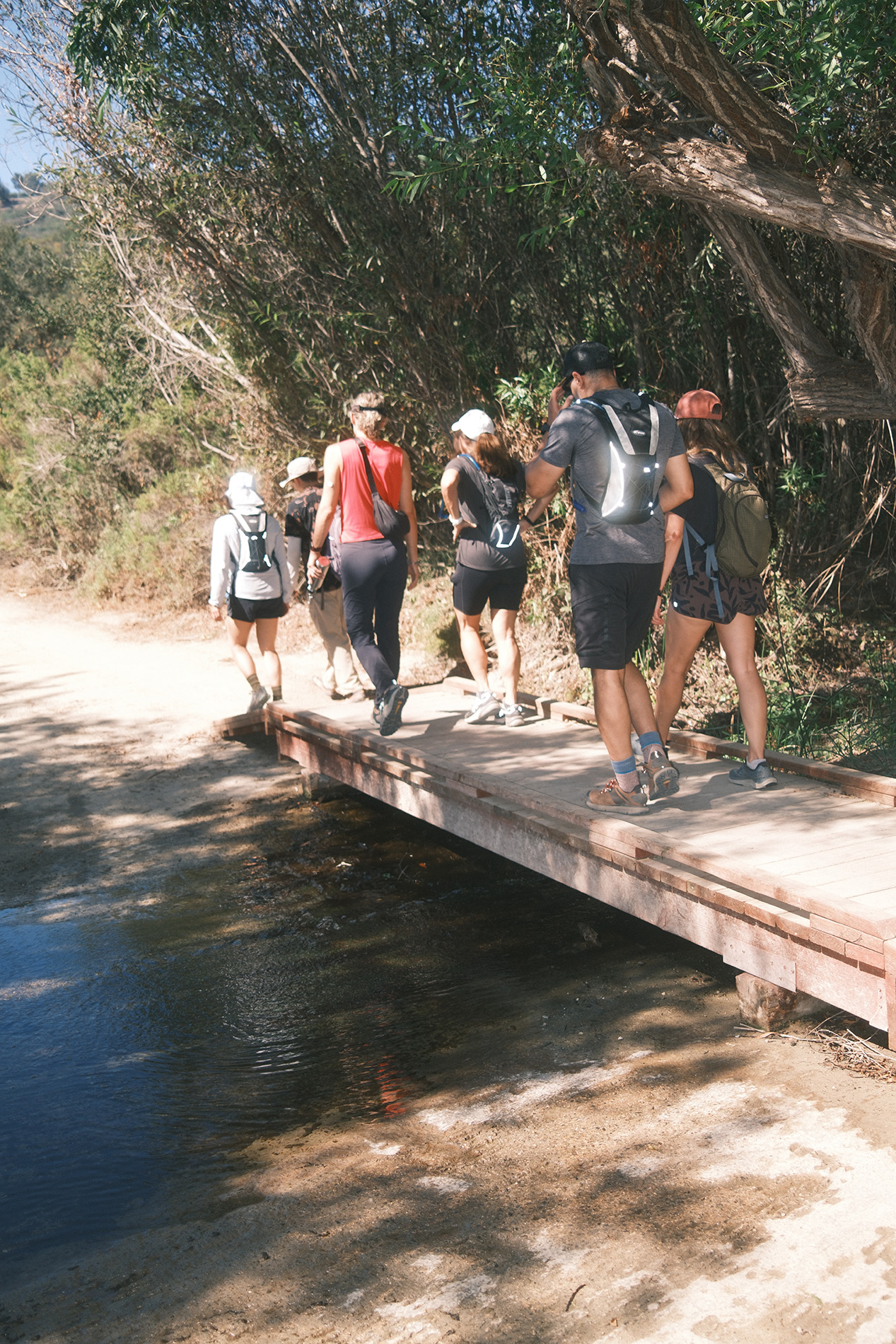
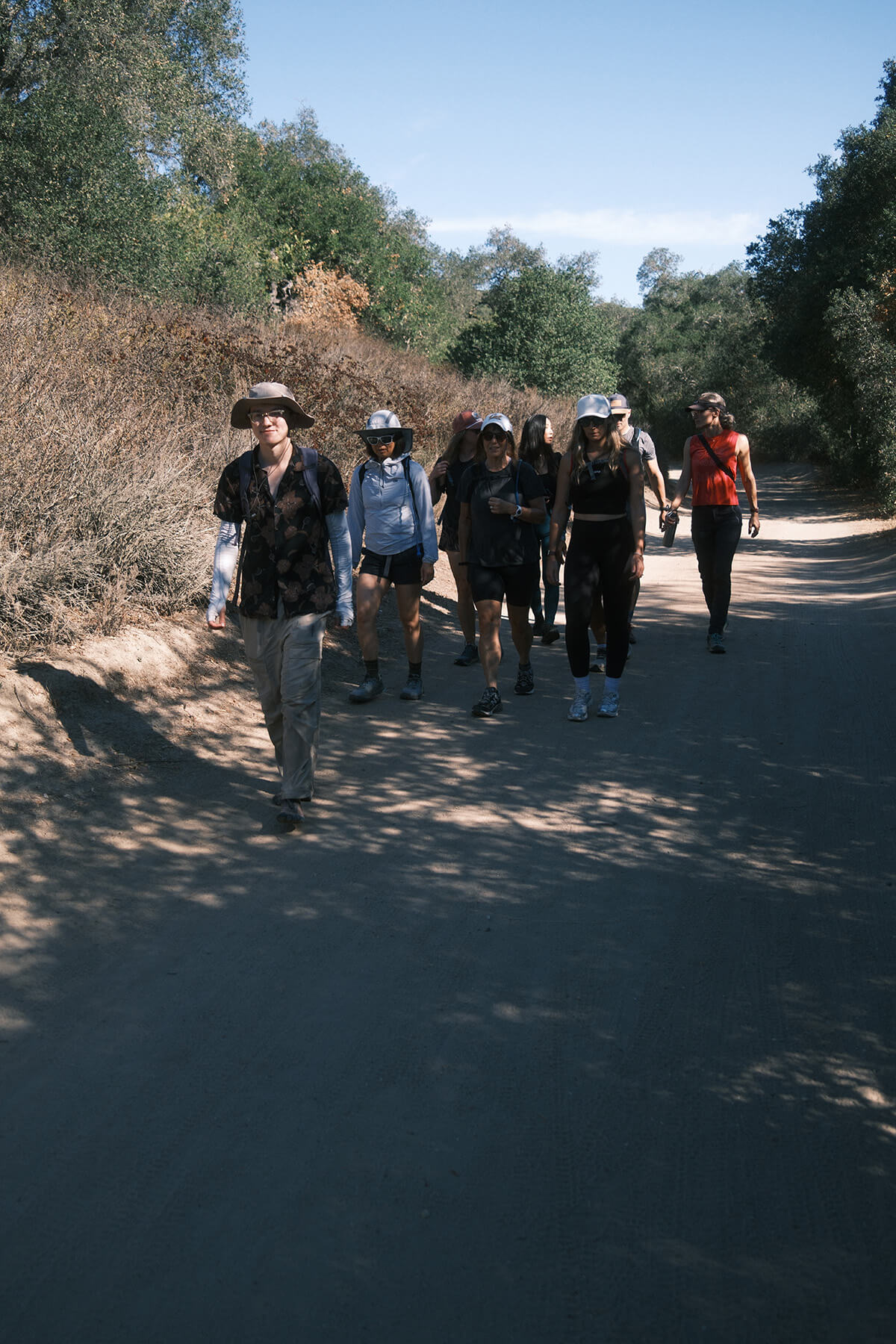
We do not call anything we run nature therapy, and this article is the reason. Our guided hikes are guided walks on canyon trails with a facilitator, breathing at the start and stillness at the end — which is a reasonable description of the structured, facilitated format that holds up best in the trials, and a dishonest thing to label a treatment.
They sit inside a week with movement, rest and structure in it rather than standing alone, because the evidence above is about repetition over eight to twelve weeks and a week cannot deliver that. What a week can do is make the format familiar enough to continue, which is a smaller claim and the one we can support.
Frequently Asked Questions
Is nature therapy an effective treatment for depression?
Not as a recognised treatment. Structured nature-based programmes of eight to twelve weeks improved depressive mood with a standardised mean difference of −0.64 across sixteen randomised trials, which is a real effect worth having alongside care. But no clinical guideline lists nature therapy as a treatment for depression, no randomised trial has compared it with cognitive behavioural therapy, and no study in the main forest-bathing review followed participants up afterwards.
Does forest bathing actually work?
The published numbers are large and the designs behind them are weak. The main meta-analysis reports an effect size of −2.54 for depression, which would make it more powerful than any established treatment — a result that should prompt scrutiny rather than confidence. In the same analysis, anxiety showed no significant effect in randomised trials, heterogeneity reached 97%, and no included study blinded anyone or conducted follow-up.
What is the difference between nature therapy and just going outside?
In the evidence, less than the marketing suggests. The formats with the best support are structured and facilitated — repeated group sessions over eight to twelve weeks — which means the structure and the facilitation may be doing much of the work. Ordinary outdoor activity has its own support: the UK depression guideline advises that any regular physical activity may help wellbeing and that benefits can be greater outdoors.
Does being in nature lower cortisol?
The claim is weaker than it sounds. In the meta-analysis of this question, forest groups had lower cortisol after the intervention — but they also had lower cortisol before it, by a larger and statistically significant margin, and the change from before to after was not significant at p = 0.20. The authors suggest an anticipatory or placebo effect may explain part of the pattern.
What is a nature prescription?
A formal referral in which a clinician recommends a specified amount of time in nature, sometimes alongside a named local programme. Across 92 studies, nature prescriptions reduced depression scores by a standardised mean difference of −0.50 and anxiety by −0.57, lowered systolic blood pressure by 4.82 mmHg, and raised daily step counts by about 900. Most of the underlying studies carried moderate to high risk of bias.
How long does a nature-based programme need to be?
Eight to twelve weeks, with sessions of twenty to ninety minutes, is the range that produced the clearest results in the reviewed trials. Single-session immersions have the weakest evidence base in the whole field, despite being the most commonly offered format. Nothing in the literature supports a one-off experience producing durable change.
Is ecotherapy available on the NHS?
In places, through green social prescribing. Between 2020 and 2023, seven English test-and-learn sites received £5.77 million and connected 8,339 people with mental health needs to nature-based activities, at an average of £507 per participant. Wellbeing improved on all four national measures, though the evaluation had no control group, so the improvement cannot be attributed to the nature element specifically. Availability depends on local commissioning.
Is "forest therapy guide" a real qualification?
There is no single regulated standard. Various organisations certify guides with training that ranges from a few days to several months, and in most countries the title is not protected. The word therapy in a programme name does not indicate clinical training, supervision or insurance. For anyone with a diagnosed condition, that distinction is worth checking before booking.
Eight to Twelve Weeks Is the Finding
The format that holds up in trials is facilitated, repeated and unspectacular. A week is where that format becomes familiar enough to keep — not where it finishes.
The Pearl Laguna is an all-inclusive wellness retreat in Laguna Beach, California: twelve rooms, never more than twelve guests, guided canyon walks daily, and nothing in the programme described as a treatment. We make no medical claims and we are not a clinical facility.
Written by The Pearl Laguna editorial team on 10 November 2026. This article is for general education and is not medical advice. Nature therapy is not a recognised treatment for depression, anxiety disorders or PTSD, and nothing here is a reason to delay or decline care. If you have a diagnosed mental health condition, discuss any nature-based programme with your clinician as an addition to treatment rather than a replacement for it. If low mood or anxiety has persisted for weeks, or you have any thoughts of harming yourself, please contact a medical professional or a crisis service in your country today.
- Coventry PA, Brown JE, Pervin J, et al. Nature-based outdoor activities for mental and physical health: systematic review and meta-analysis. SSM — Population Health. 2021;16:100934 — 50 studies; I² 85.7% for depressive mood; outcomes measured mostly at intervention end
- Nguyen P-Y, Astell-Burt T, Rahimi-Ardabili H, Feng X. Effect of nature prescriptions on cardiometabolic and mental health, and physical activity: a systematic review. The Lancet Planetary Health. 2023 — 92 studies, 28 in meta-analysis; most at moderate to high risk of bias
- Kotera Y, Richardson M, Sheffield D. Effects of shinrin-yoku (forest bathing) and nature therapy on mental health: a systematic review and meta-analysis. International Journal of Mental Health and Addiction. 2022;20:337–361 — 20 studies, 2,257 participants; no blinding, no follow-up, I² 87–97%, 18 of 20 studies from Asia
- Antonelli M, Barbieri G, Donelli D. Effects of forest bathing (shinrin-yoku) on levels of cortisol as a stress biomarker: a systematic review and meta-analysis. International Journal of Biometeorology. 2019;63:1117–1134 — pre-intervention groups already differed; pre-post change not significant (p = 0.20); five of eight trials at high risk of bias
- Park BJ, Tsunetsugu Y, Kasetani T, Kagawa T, Miyazaki Y. The physiological effects of shinrin-yoku: evidence from field experiments in 24 forests across Japan. Environmental Health and Preventive Medicine. 2010;15(1):18–26 — 280 participants, all aged 21.7 ± 1.5 years, twelve per site, crossover design
- National Institute for Health and Care Excellence. Depression in adults: treatment and management. NG222. 2022 — eleven options listed for less severe depression; group exercise included, nature-based therapy not listed
- NHS England. Green social prescribing — programme description and the national Test and Learn evaluation
- National evaluation of the Preventing and Tackling Mental Ill Health through Green Social Prescribing project: policy briefing. 2024 — £5.77m, seven sites, 8,339 participants, £507 per participant; no control group
- White MP, Alcock I, Grellier J, et al. Spending at least 120 minutes a week in nature is associated with good health and wellbeing. Scientific Reports. 2019;9:7730 — 19,806 respondents, cross-sectional
- Sudimac S, Sale V, Kühn S. How nature nurtures: amygdala activity decreases as the result of a one-hour walk in nature. Molecular Psychiatry. 2022;27:4446–4452 — 63 participants; urban walk did not increase amygdala activity
- Noetel M, Sanders T, Gallardo-Gómez D, et al. Effect of exercise for depression: systematic review and network meta-analysis of randomised controlled trials. BMJ. 2024;384:e075847 — 218 trials; no single modality established as superior
- Hiking and Mental Health: Why Nature Changes the Way We Feel
- Yoga for Anxiety and Depression: What Happens in the Brain
- Depression and the Nervous System: Is It More Than a Chemical Imbalance?
- Burnout vs. Depression: How Can You Tell the Difference?
- Why Rest Is a Biological Need, Not a Luxury
- Breathwork and Mental Health: Can Changing Your Breathing Change Your State?